
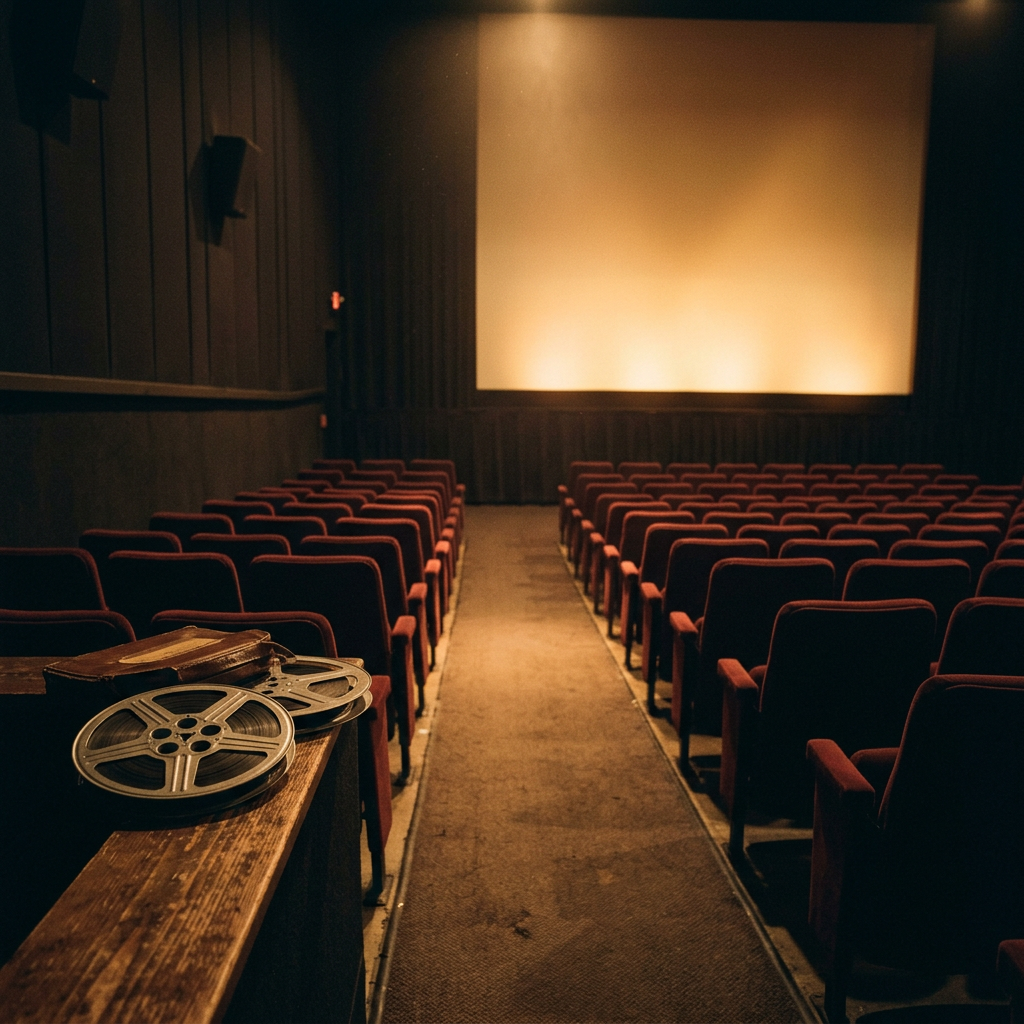


The most underrated movie I’ve ever watched?
Tough.
Wrong question to ask a movie buff on a Thursday!
I can’t promise you one, WordPress, but I will give you two, and not because they are the most underrated. They are the ones that popped into my mind when I read the prompt.
First up, Karthik Calling Karthik. A gut-wrenching movie on mental illness, emotional isolation, and the tragedy of loneliness. Starring Farhan Akhtar, it traces the life of a lonely, shy, introverted man whose life changes suddenly after he receives a call.
What starts off as a thriller slowly begins to mimic a psychological thriller and ends up showing what life is like for someone with schizophrenia.
This movie holds a deeply special place for me, as the theme of the emotional isolation of a person suffering from a mental illness hit home. I was personally recovering from depression when I saw the movie, and it left me feeling deeply SEEN.
No human knew about my suffering. I never shared my mental health issues, fearing stigma from my own family. In my 20s, depression translated to either a psycho at best or insane at worst. There was no language ready to speak about what I went through. “Snap out of it” seemed to be everyone’s go-to remedy.
Karthik Calling Karthik addressed a different mental illness, but it was the first time I came across something that came close to my personal story. It filled my heart with a feeling that has no name. The feeling of being seen by someone that ain’t real but reel made it even better.
The fear of being judged is far too real in the real world. In the world created by reels, the character I resonate with might be going through the same issue I am too, and he might be criticized, judged, bullied, and mocked for it too, but what I feel is a sense of camaraderie. We are both in the same boat, but I am not the one being judged. It’s a strange kind of empathy, perhaps… I feel for him, but I am also secretly relieved I am not him. I SEE him, and I feel SEEN too. You understand, right?
Everything about the movie felt so close to my real life: the loneliness that is akin to acid gnawing through my insides, the pinned-to-the-wall feeling that drove me to self-harm, the silent screams from within hoping someone could hear me… if only…
The ending is heart-rending and hopeful. It left me with hope of seeing the light at the end of a tunnel that never seemed to end.
But it was a dud at the box office. Bollywood has very few movies that are kind to mental illness. Karthik Calling Karthik is probably one of the earliest ones that stayed true to the reality of someone living with and fighting for survival with mental illness. But people being people, they trashed the movie and called it senseless.
I will never forget the movie for what it gave me: hope.
It gave me the will to survive, to hope for recovery, to dream of a day when I would come out of what seemed like an eternally cloudy day in the life of my mind.
When Hollywood makes a movie on schizophrenia, the world applauds it and hands it over a well-deserved Oscar (yes, I am alluding to A Beautiful Mind). When a brave man takes a leap of faith and manages to make a path-breaking movie on the same topic, it sank without a trace.
Sad.
Second up is Superboys of Malegaon. The movie, not the documentary.
If you are a cinema buff, you have likely seen it. If you are a typical Bollywood fan, it’s highly likely you haven’t even heard of it.
I watched it on Amazon Prime. I had no idea it was released in theaters. That’s how badly this gem of a movie was treated.
Starring some of the best actors of Hindi cinema, it is one of those meta movies about cinema itself. Following the lives of five friends, all Muslim, it traces the arc of an aspiring filmmaker, a scriptwriter, and actors from a small town, Malegaon who come together to make a movie.
It brought to film the world-famous Indian jugaad—how we manage to get everything done out of nothing. Watching the movie is like being a fly on the wall… err, camera. You get to see everything happening within the screen from the eyes of the camera that recorded the film and through the eyes of the camera the people within the film are wielding to make their own film.
This movie is also about what it means to be an artist. As artists, we can come across as obtuse, obsessively guarding our vision and going to any lengths to stay true to it.
The story brings it across through the clashes between each of the friends: a tiff between the writer and director, between the director and actor… no one seems to be ready or kind enough to allow himself the luxury of a different viewpoint, leading to each one going their separate ways.
I was silently rooting for the one guy who held the motley group together. The silent, self-sacrificing man, aspiring to become an actor, hoping to play the leading man in his friends’ movies but never vocalizing it for the greater good of the group.
Played to perfection by Shashank Arora—the man with the face of Rodin’s The Thinker—his illness brings them all together once again, with him finally making his wish of becoming someone the world remembers forever come true.
The movie ends with a scene that stole my heart and made me cry, symbolizing the flight of dreams, the possibility of being remembered for eternity through the medium of cinema, and the idea that cinema itself is a bridge between the real and the reel, sometimes blurring the lines and going beyond.
For an artist who refuses to fall to the trappings of mainstream art, this movie also left me with hope. Hope that maybe my art will survive the ravages of time even if I don’t.
As is common in Bollywood, this one too sank without a trace. Makes me wonder what people really want from their movies. This had everything: superlative acting, eye-catching visuals, and good music. And that rare thing that most of Bollywood lacks—a solid storyline. Yet…
This movie is proof that most of the best talent in Hindi cinema is rarely seen in those wham, bam Bollywood movies that make a lot of noise and earn billions but leave me scratching my head, why oh why?
Both movies deserved to succeed and to be experienced by people for their unique perspectives. But, as is often the case, reality is stranger than fiction. I will never know why these movies, which are unforgettable to me, never made it to mainstream success.
Perhaps they are happy in their own little world, immortal gems to mavericks like me. I am just grateful our worlds collided and left me a better human being, a better artist, a survivor who learned to rejoice in her uniqueness.
In the end, art and cinema succeeded where box office failed.


Care to drop a tiny pearl from the ocean of your mind?