
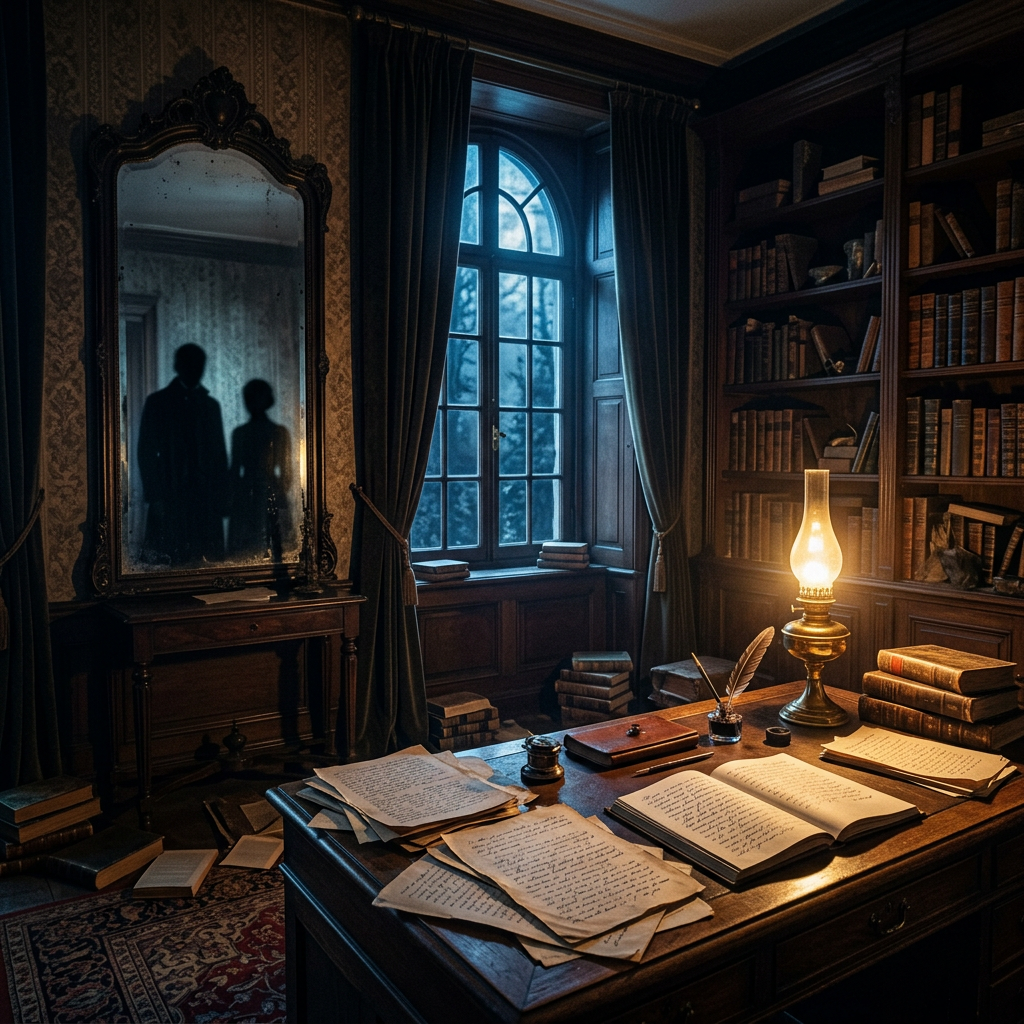


The prompt begs the question: What do I fear the most?
Is it the obvious culprits?
Jump scares? Cheap thrills?
Monsters? Demons? Ghosts? Leviathans? Aliens?
Sure. They all creep me out—leaving me afraid of my own shadow for a few nights until I laugh it off and get back to life.
My deepest fears, though, always come back to the most complex creatures in the universe—humans.
Their duality. Their basal nature lying dormant, waiting to be unleashed on an unsuspecting insect, animal, or, worse, another human.
That instinct to say a word that sounds like sarcasm but hurts like a papercut. The repressed desire to hurt something or someone smaller and weaker than the self, deriving what feels like power and superiority. The thrill that arises deep within knowing that our words and deeds leave a permanent scar on the other and yet unleashing a cascade of searing pain on the other.
MJ tried to sing a ballad out of it—Human Nature.
R. L. Stevenson did one better. He wrote what I think is the finest example of shedding light on the duality of human nature.
The Strange Case of Dr. Jekyll and Mr. Hyde remains to this day my most chilling experience. A masterclass in holding the mirror to society and gently prodding, are you who you think you are?
I was 15 and the experience of coming face to face with the depravity, debauchery, and disintegration of the human soul left me having nightmares for a long time.
We meet the gentle and highly respected doctor and scientist Jekyll, a classic good man upheld in society by day, beneath whom lies the deformed, twisted, violent Mr. Hyde, secretly unleashing his repressed desires on the weak and the poor by splitting his persona by night.
One side as sweet as honey. The other as prickly as a thorn floating in it.
The destructive battle rages on within the doctor as he tries to keep Mr. Hyde at bay, only bringing him out at night. But when was the last time repressed desires loved to remain repressed, especially once they have tasted freedom and shed blood?
We can fool ourselves all we want. But can we honestly say we are all good? And believe it?
We are both. At all times, we carry the seed of the worst thing the universe has yet seen and experienced within us. We are all maneaters in sheep’s clothing, one drop of blood away from transmogrification. We are just one act away from crossing the threshold between good and evil.
One becomes two. Two becomes too many to count. Voilà! We are addicted.
We call it pleasure-seeking and bury it under the stress and strain of being human, all the while knowing we actually love going berserk and causing pain to the other.
There. We are a wreck. Our evil self has used the override pass and our good self… well, it’s too bored of the mundane to argue anymore.
We have crossed over officially.
Who is to blame?
In the end, Jekyll leaves a confession and takes poison to kill Mr. Hyde—the persona he created to experience his evil side, his desires that couldn’t be restrained anymore until they ended up usurping the good Dr. Jekyll completely.
Thirty years later, this book remains the one book I always go back to, tracing my curiosity to know what it actually means to be human and learning to accept the frailty of being human, knowing what the haunting cost of losing my humanity has on humanity itself.
What genuinely scares me?
The weight of responsibility that comes with the knowledge that saying yes to being human means saying no to the monster who lives within me, always within reach, always waiting to break free.
Don’t believe me? Try looking at yourself in the mirror on a dimly lit night, preferably by candlelight. Tell me you aren’t frightened by what looks back.
Related Post:


Care to drop a tiny pearl from the ocean of your mind?